3D Printed Drones: Materials, Parts & How They're Made
Sep 16, 2026

3D Printed Drones
3D printed drones are drones whose structural parts (airframe, wings, landing gear and propellers) are manufactured using additive manufacturing instead of traditional moulding or machining. 3D printing lets designers build lighter, more complex drone structures in days instead of weeks, with no tooling cost. And when the printing material is carbon fiber rather than plastic, the result is a drone frame that is strong enough for real payloads while staying remarkably light.
This article covers the types of drones, which parts can be 3D printed, whether printed drones are actually better, and why carbon fiber has become the material of choice for high-performance drones.
Types of drones
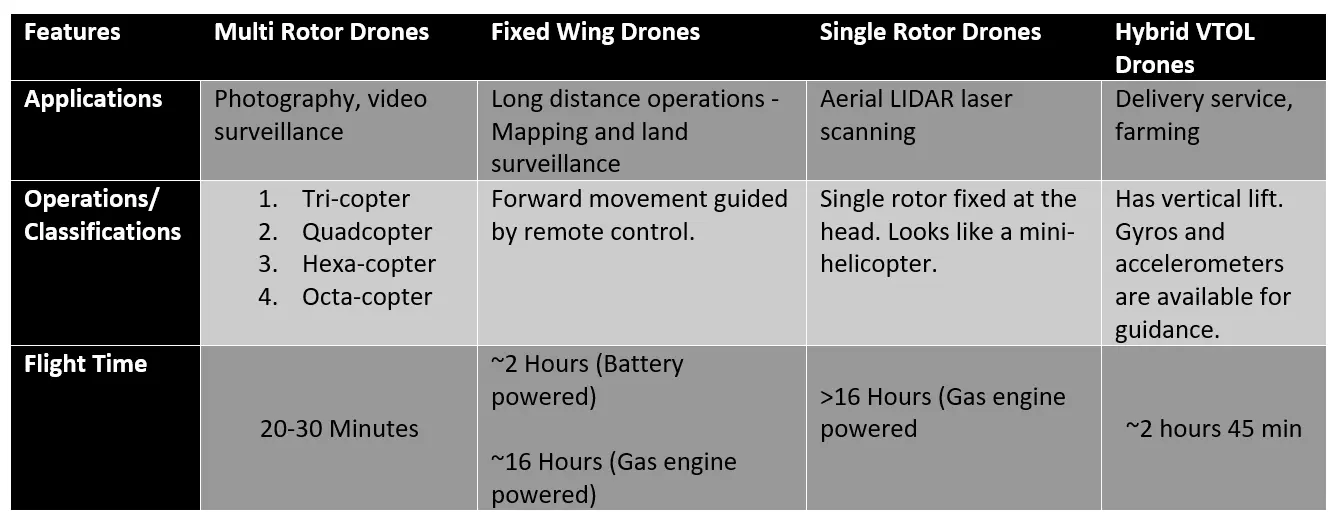
Drones come in different shapes and sizes, and the design depends entirely on the job. Aerial photography drones differ structurally from delivery drones; long-endurance drones differ from short, agile ones; heavy-lift drones differ from high-flying ones. Broadly, they fall into four aerial platforms:
- Single-rotor helicopter drones
- Multi-rotor drones
- Fixed-wing drones
- Fixed-wing hybrid (VTOL) drones
Which drone parts can be 3D printed?
A drone contains both electronic components (flight controller, motors, GPS, battery, transmitter) and structural ones. It is the structural parts that benefit most from 3D printing:
1. Airframe
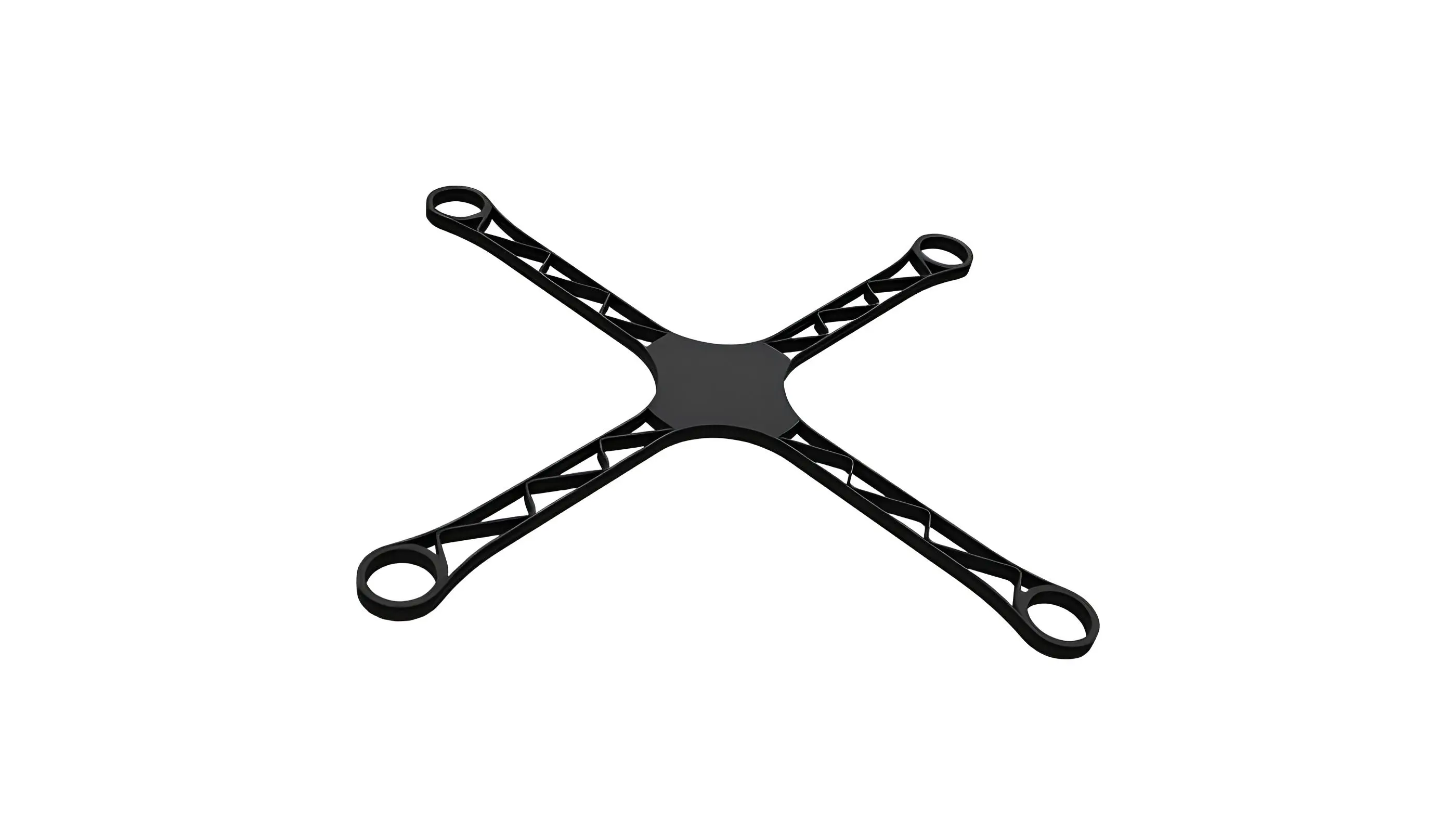
The airframe is the skeleton of the drone, and everything else mounts to it. A rigid, strong and lightweight airframe is the foundation of a high-performing drone. Frames can be made from carbon fiber, aluminium or glass fiber, joined with fasteners or industrial bonding agents. The placement of propellers and wings decides the load path, which in turn dictates how light the drone can ultimately be.
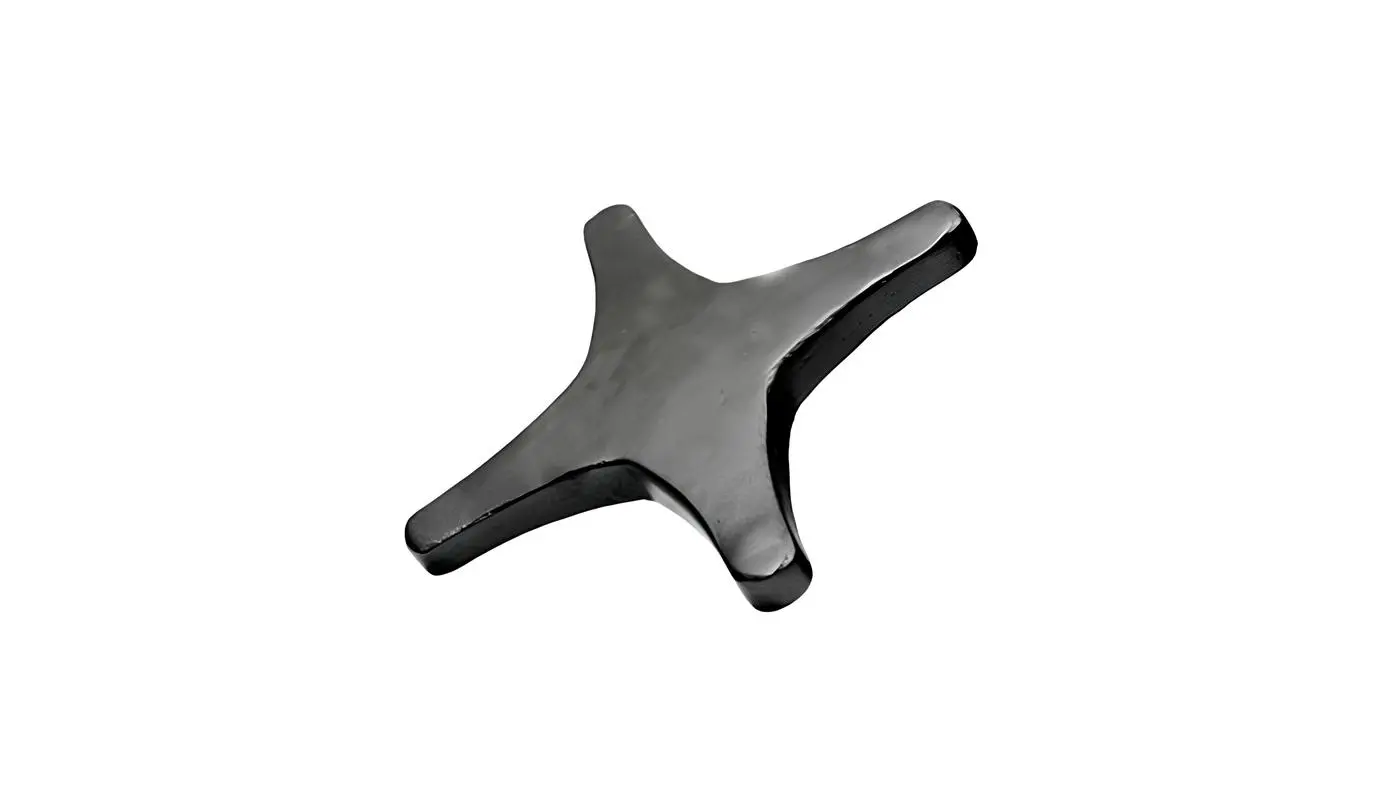
3D printing lets you fabricate airframes exactly as designed, including topology-optimised geometries that traditional manufacturing simply cannot produce. Below are examples of airframes fabricated at our own drone design facility.
2. Landing gear
Landing gear supports the drone and enables a smooth landing; on delivery drones it often carries the payload too. Its design varies with payload capacity, landing terrain, landing type (soft or hard, vertical or wheeled), shock absorption, and whether the drone needs quick assembly and disassembly.
Because so many factors drive the design, almost every drone needs different landing gear, which makes traditional tooling expensive and slow. 3D printing lets you print a new landing gear design every time, in plastic, metal or composite, without the mould costs.
3. Wings
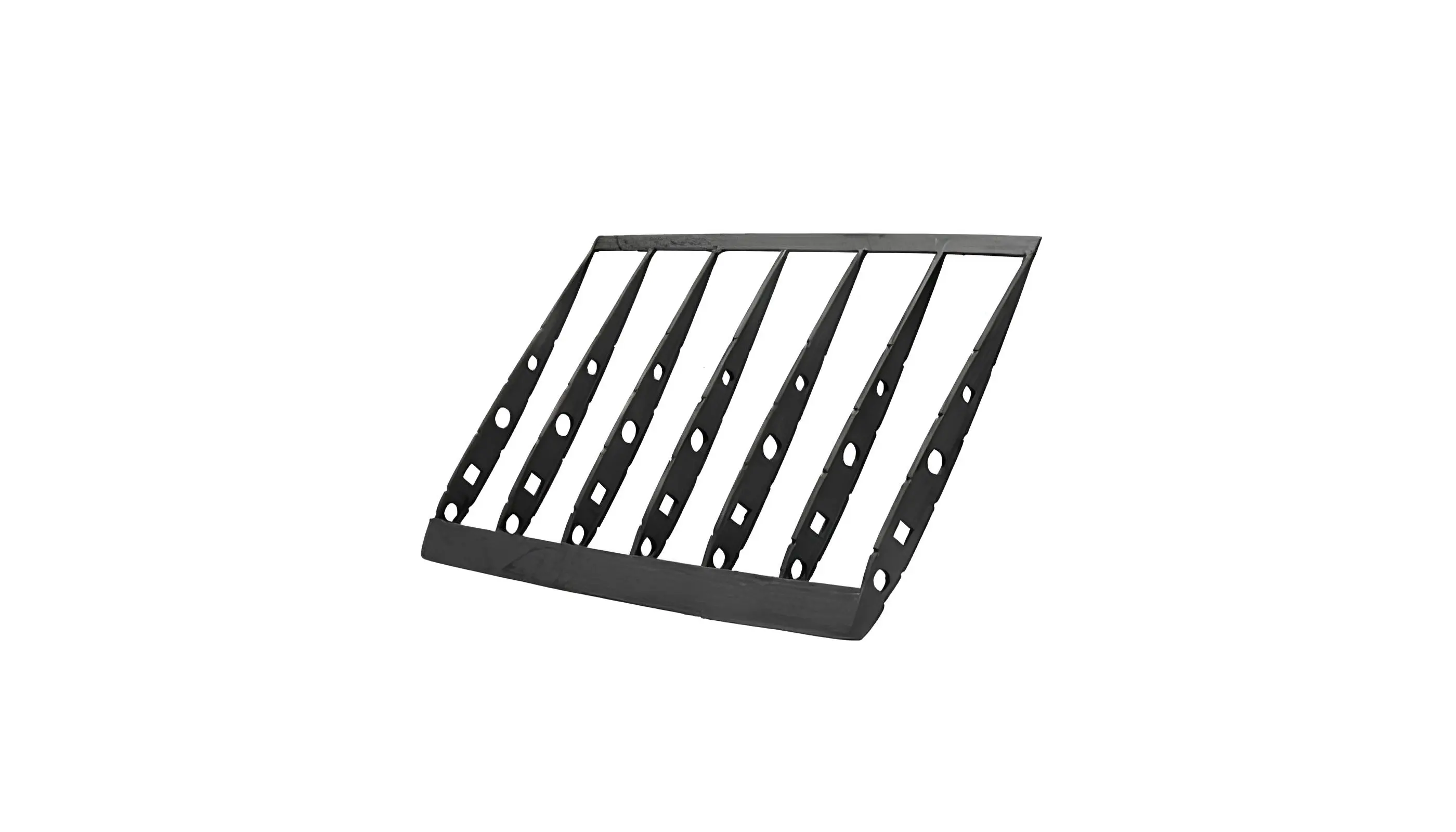
For fixed-wing and hybrid drones, the wings are the primary load-bearing structure and a major share of the total weight, so improving the wing improves the whole aircraft. Inside the wing, ribs and spars carry the load and are often complex in shape. 3D printing can produce an entire wing frame in one piece, or as components that assemble easily, and can even combine different materials in a single print to remove weight exactly where it is not needed.
4. Propellers
Propellers generate the thrust that lifts and moves the drone. Plastic, wood and carbon fiber are the common materials, and carbon fiber propellers are preferred for high-performance drones because they are lighter and stronger. The advantages are practical:
- Less vibration
- Less noise while spinning
- Lighter and stronger than plastic
- Lower inertia, so the motor spins up faster
3D printing is not yet mainstream for high-performance propellers, but it is an excellent way to produce custom or replacement props quickly. We have developed in-house techniques that infuse resin into the printed part at controlled ratios, producing propellers as strong as traditionally manufactured ones, a process that can be automated for volume production.
Are 3D printed drones better?
3D printing is an additive process, unlike CNC machining or injection moulding. For drones specifically, it has five clear advantages:
- Flexibility in materials: switching material is as simple as changing the feedstock, rather than re-tooling an entire production setup.
- Complex structures: lightweight, optimised geometries that traditional processes could never manufacture become printable.
- Speed from design to part: components can be printed immediately before assembly, which shortens iteration and lead times dramatically.
- Spare parts on demand: drones get damaged; printing a replacement beats stockpiling spares.
- Customisation: a camera drone becomes a delivery drone with a new printed bracket, not a new production line.
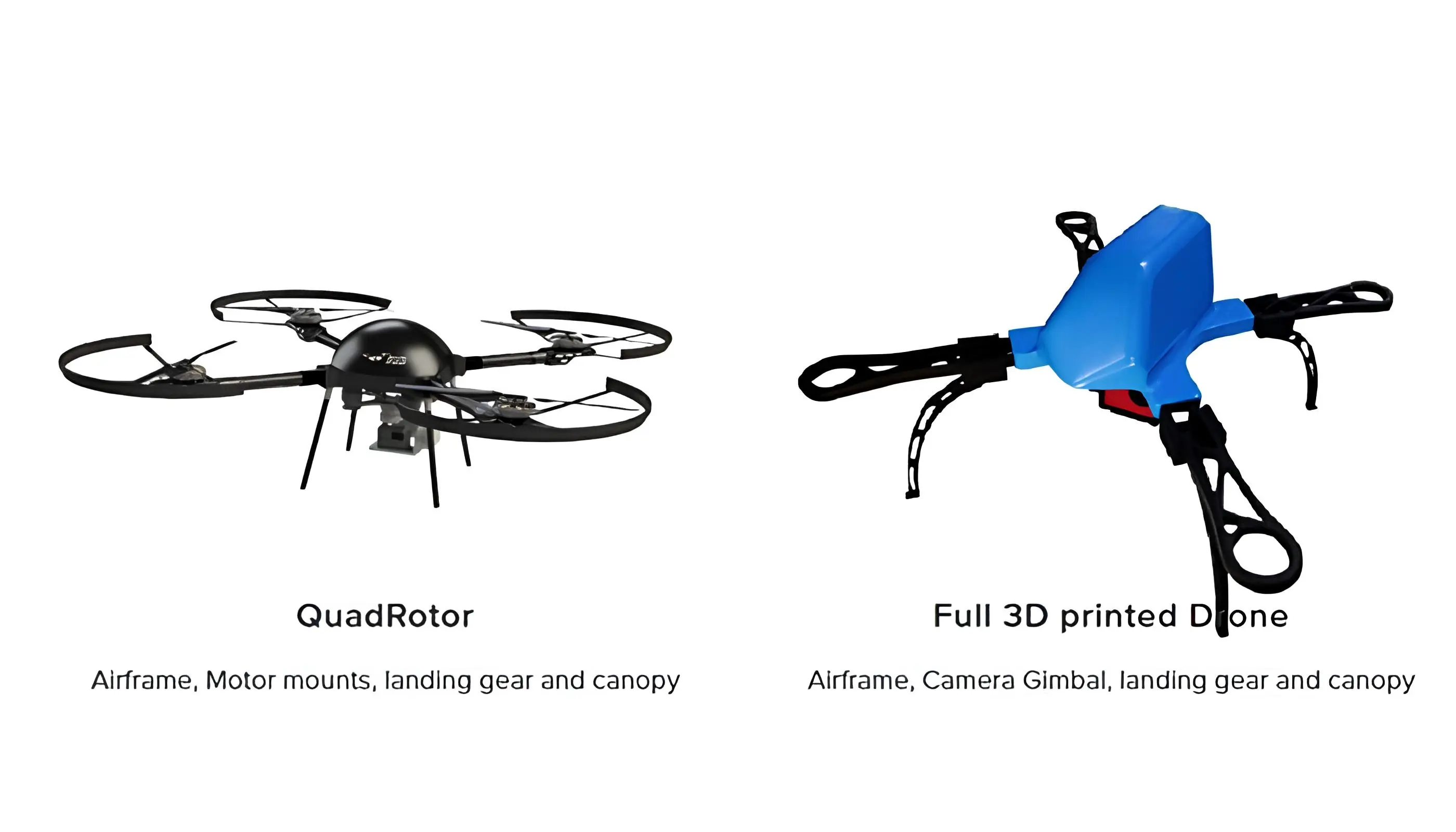
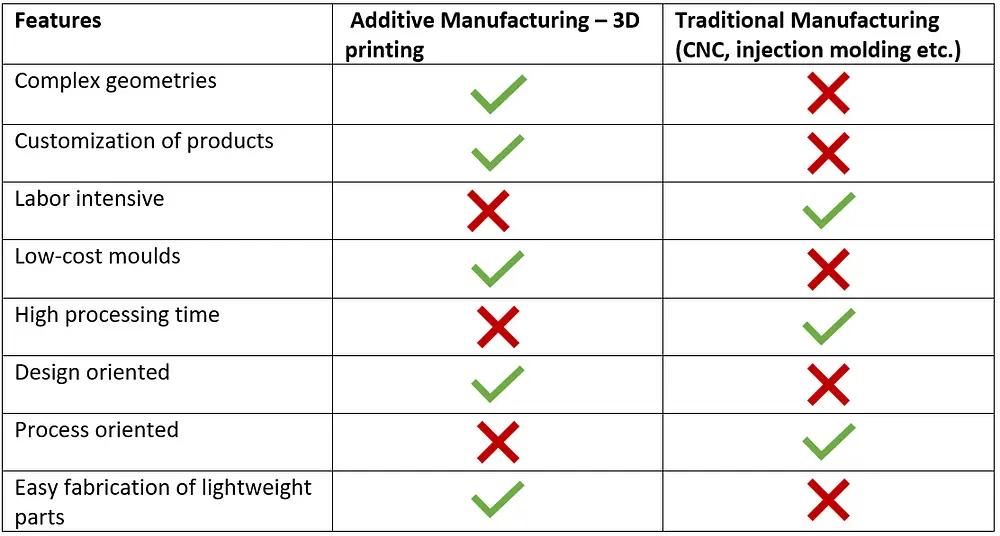
In practice most drones are built using a combination of methods, but as printing materials improve, more manufacturers are moving structural parts to additive manufacturing.
Why carbon fiber for drones?
Weight is the constraint that governs every drone design. Every gram costs flight time, payload or agility, so the goal is always the lightest structure that still does the job.
Aluminium is a reasonable lightweight option at a density of about 2.7 g/cm³. Carbon fiber is considerably lighter at roughly 1.7 g/cm³, while offering comparable stiffness, which is why it has become the default for high-performance drone structures. It can also be combined with other reinforced polymers to tune performance further.
Carbon fiber composites also have a coefficient of thermal expansion close to zero and hold up well at high temperatures, where metals such as aluminium and titanium change dimension. The three properties that make carbon fiber the most feasible choice for drones are:
- Low weight
- Near-zero thermal expansion
- High heat resistance
Continuous carbon fiber 3D printing: the best of both
Standard 3D printing uses plastic, which caps how strong a printed drone part can be. Continuous carbon fiber 3D printing removes that ceiling: continuous strands of carbon fiber are laid inside the part as it prints, giving it structural strength while keeping the light weight and design freedom of additive manufacturing.
This is the technology we build at Fabheads. We manufacture carbon fiber drone frames and structural components using continuous carbon fiber 3D printing, including airframes, wing structures and propellers that are strong enough to fly real missions yet light enough to extend endurance and payload.
What does the future of drones look like?
Drone adoption keeps widening: construction firms use them for land surveys and site safety, agriculture for crop monitoring, logistics for delivery, and defence for surveillance. Each new industry brings its own airframe requirements, which is precisely why flexible, low-tooling manufacturing matters.
The direction of travel is clear: drones are being asked to fly longer, carry more and cost less to build. All three point to the same answer: lighter, stronger structures made without expensive tooling. That is what 3D printing with carbon fiber delivers.
Frequently asked questions
Can a drone be 3D printed?
Yes. The structural parts (airframe, wings, landing gear, propellers and mounts) can all be 3D printed. Electronics such as motors, batteries and flight controllers are fitted afterwards.
What is the best material for a drone frame?
Plastic is fine for prototypes and light hobby drones. For payload-carrying or long-endurance drones, carbon fiber composite gives the best strength-to-weight ratio.
Are 3D printed drone frames strong enough?
Plastic-only frames are limited. Frames made with continuous carbon fiber 3D printing are strong enough for commercial and industrial drones.
Is carbon fiber better than aluminium for drones?
For most drone structures, yes: carbon fiber is lighter at similar stiffness (about 1.7 g/cm³ versus 2.7 g/cm³) and barely expands with temperature.
Designing a drone that needs to fly longer or carry more? Fabheads manufactures custom carbon fiber drone frames and structural components using continuous fiber 3D printing. Talk to our team