Carbon Fiber Archimedes Screw: A 3D Printing Case Study
Sep 26, 2026

Yes, an Archimedes screw can be made from carbon fiber composite. Fabheads fabricated one using continuous fiber 3D printing: around 30% lighter than an equivalent aluminum screw, corrosion-resistant, and delivered in under a week against the month or more that metal fabrication typically takes.
This is how it was done, and why the shape makes it harder than it looks.
What is an Archimedes screw?
The Archimedes screw is one of the oldest tools still in wide use. Its helical shape carries material up or down when rotated, and the design dates back to the 3rd century BCE (the Egyptians used it to lift water from the Nile). It remains efficient at moving large volumes of water across different elevations.
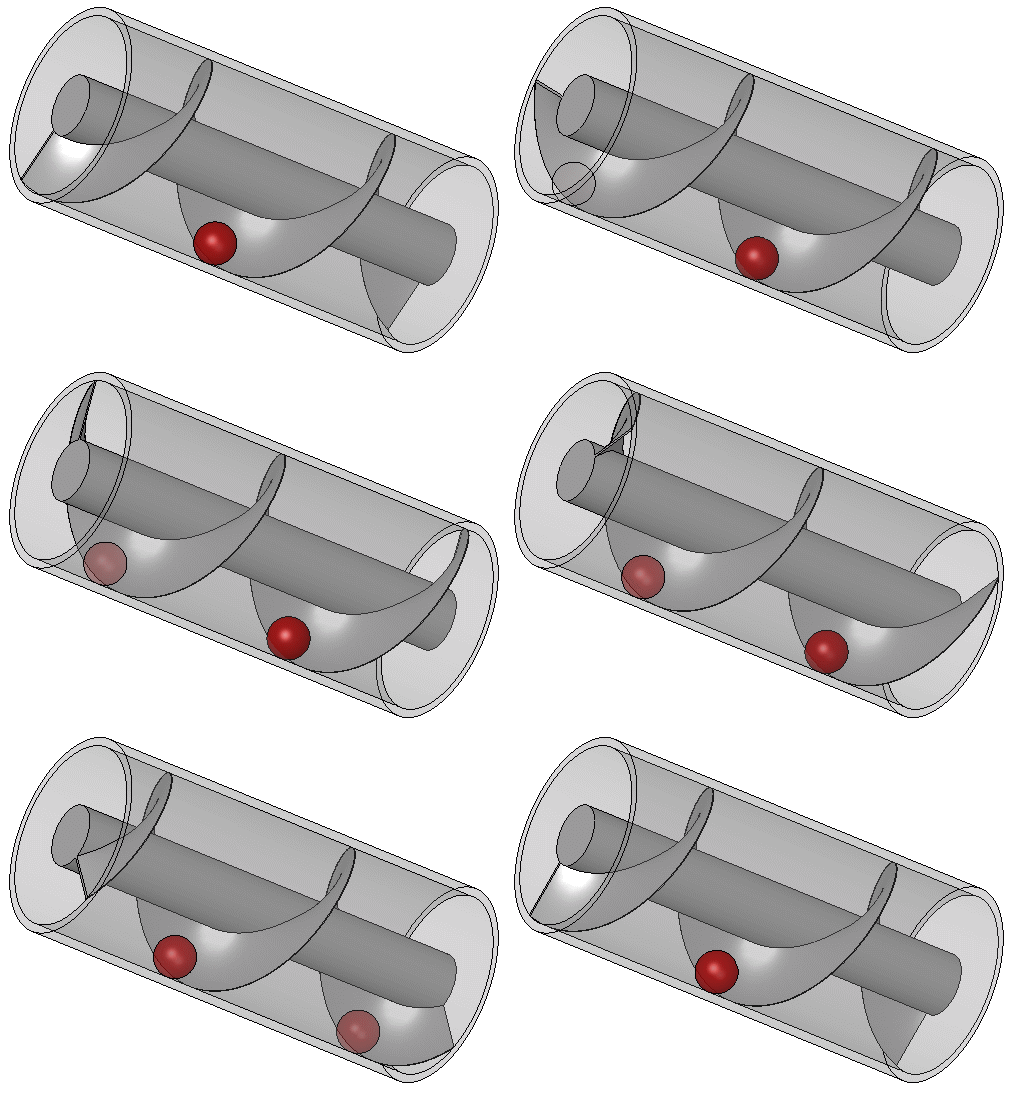
Where are Archimedes screws used today?
Most commonly in irrigation and in transferring water from drains, but there are some less obvious applications:
Screw pumps
The Archimedes screw pump remains standard equipment in water treatment, drainage and wastewater handling, where the ability to move debris-laden water without clogging matters more than outright efficiency.
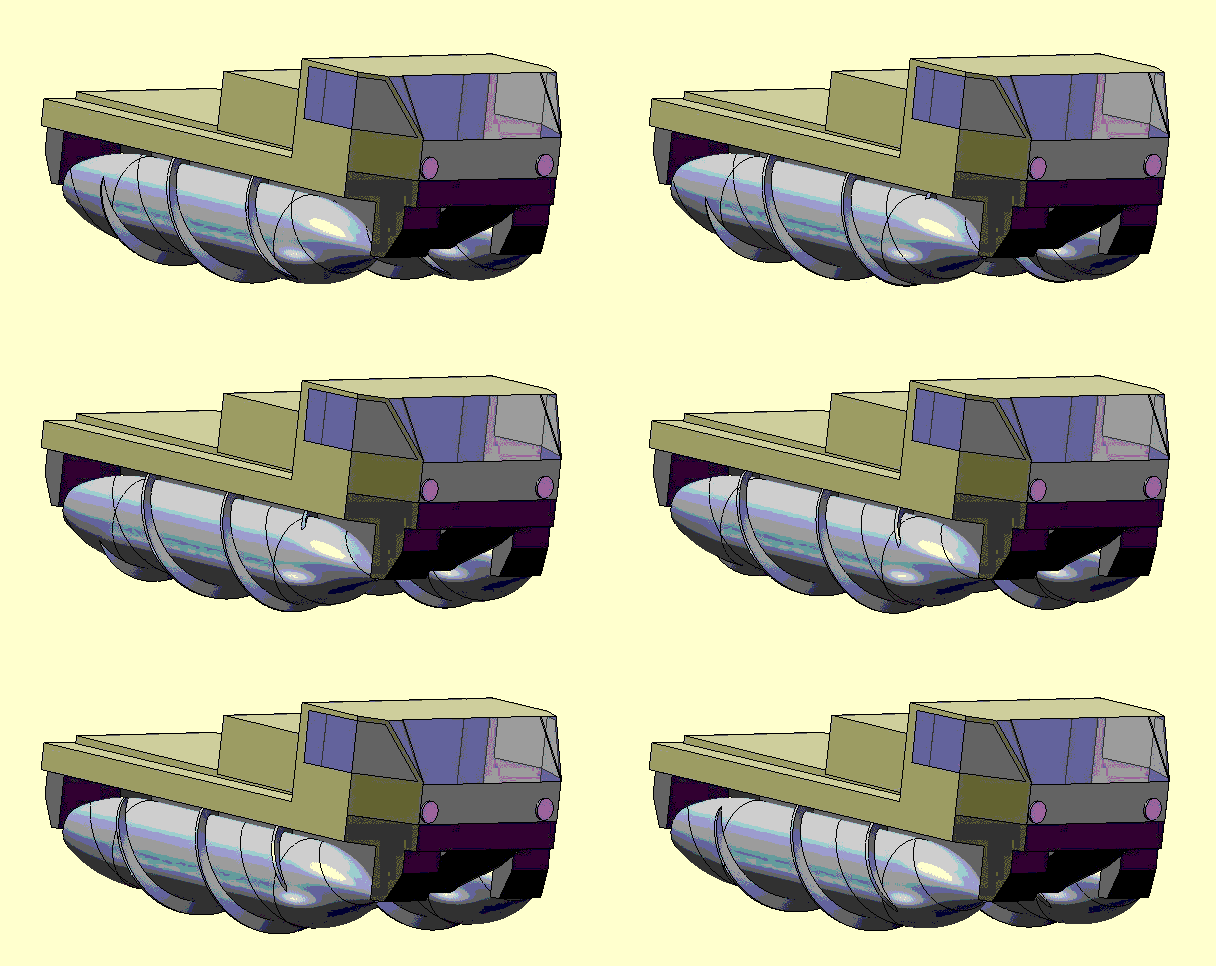
Amphibious vehicles
In a screw-propelled vehicle the cylinder acts as both propulsion and float: an unusual application, but a real one.
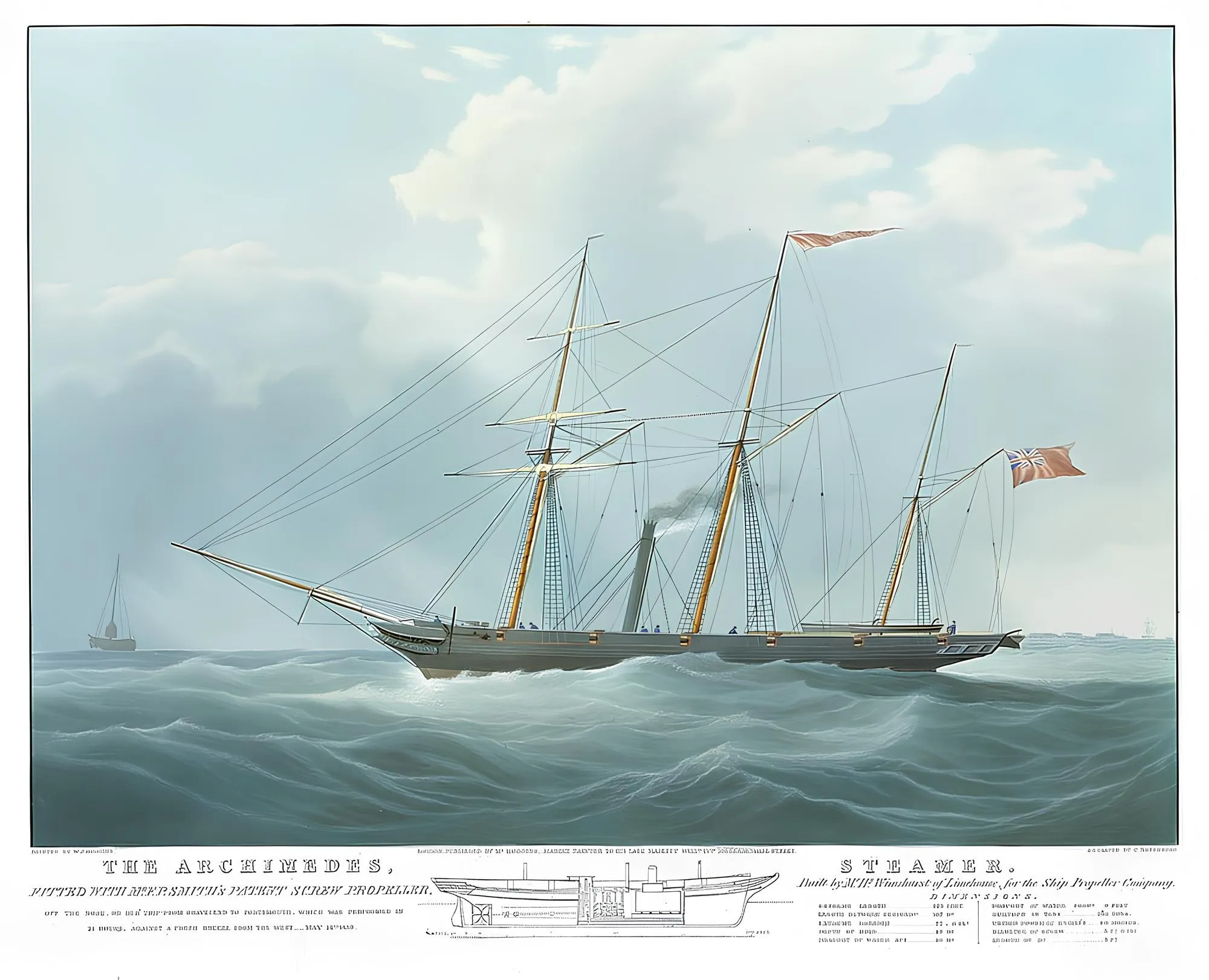
Screw-propelled ships
SS Archimedes was the first ship ever to use screw propellers.
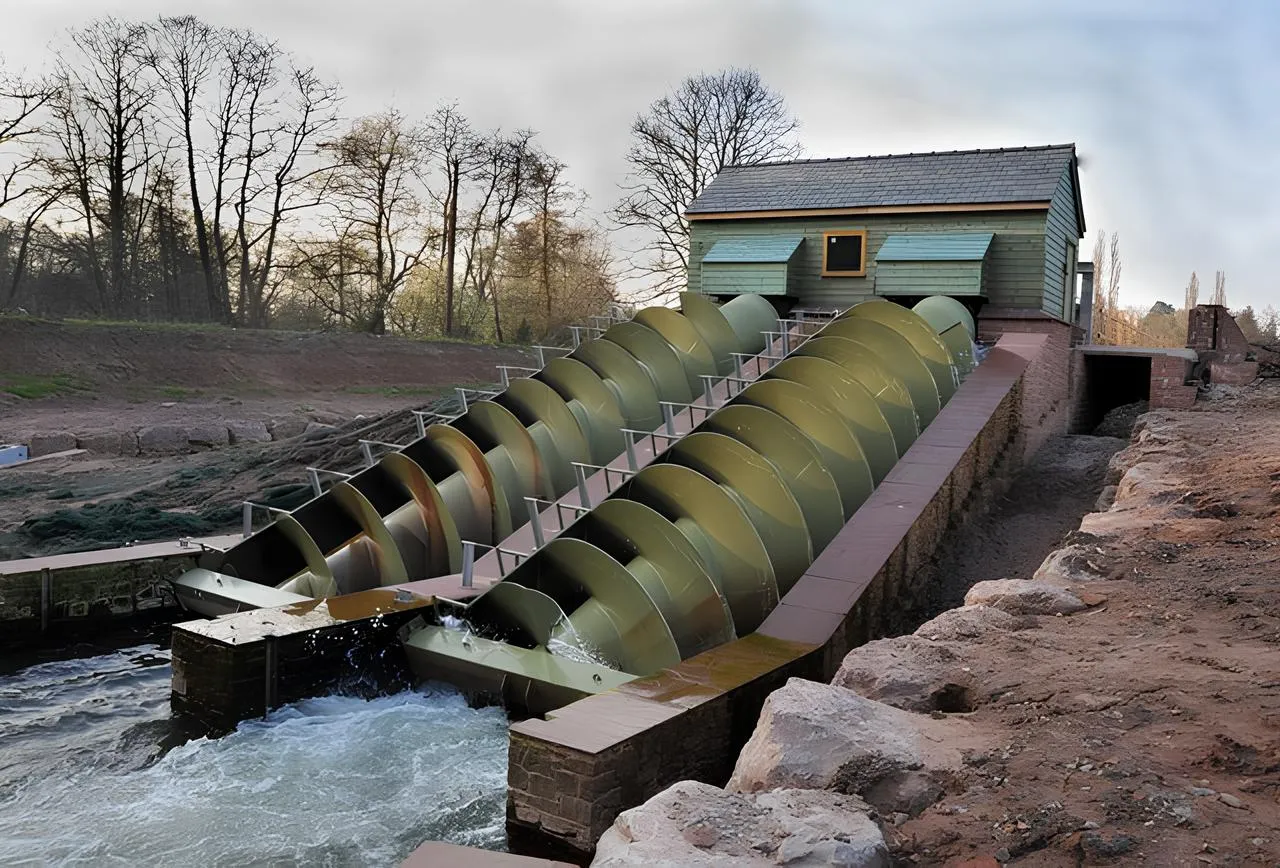
Screw turbines
Archimedes screw turbines convert the potential energy of water into work, and remain in use in Canada, the United States and the United Kingdom.
How are Archimedes screws traditionally manufactured?
Screws used in heavy-duty industry are made from metal (usually steel) through a combination of processes:
- Welding
- Sheet metal fabrication
- Forging
- Machining
Depending on dimensions, a single screw can take from a month to several months to complete in production, and considerably longer at the prototype or development stage.
Metal also brings two inherent limitations. It corrodes, particularly in marine or humid environments. And even without corrosion, metal parts have a preset fatigue life, which restricts their use in high-cycle applications. Those two constraints are what prompted us to develop a carbon fiber alternative.
Why is a carbon fiber Archimedes screw difficult to make?
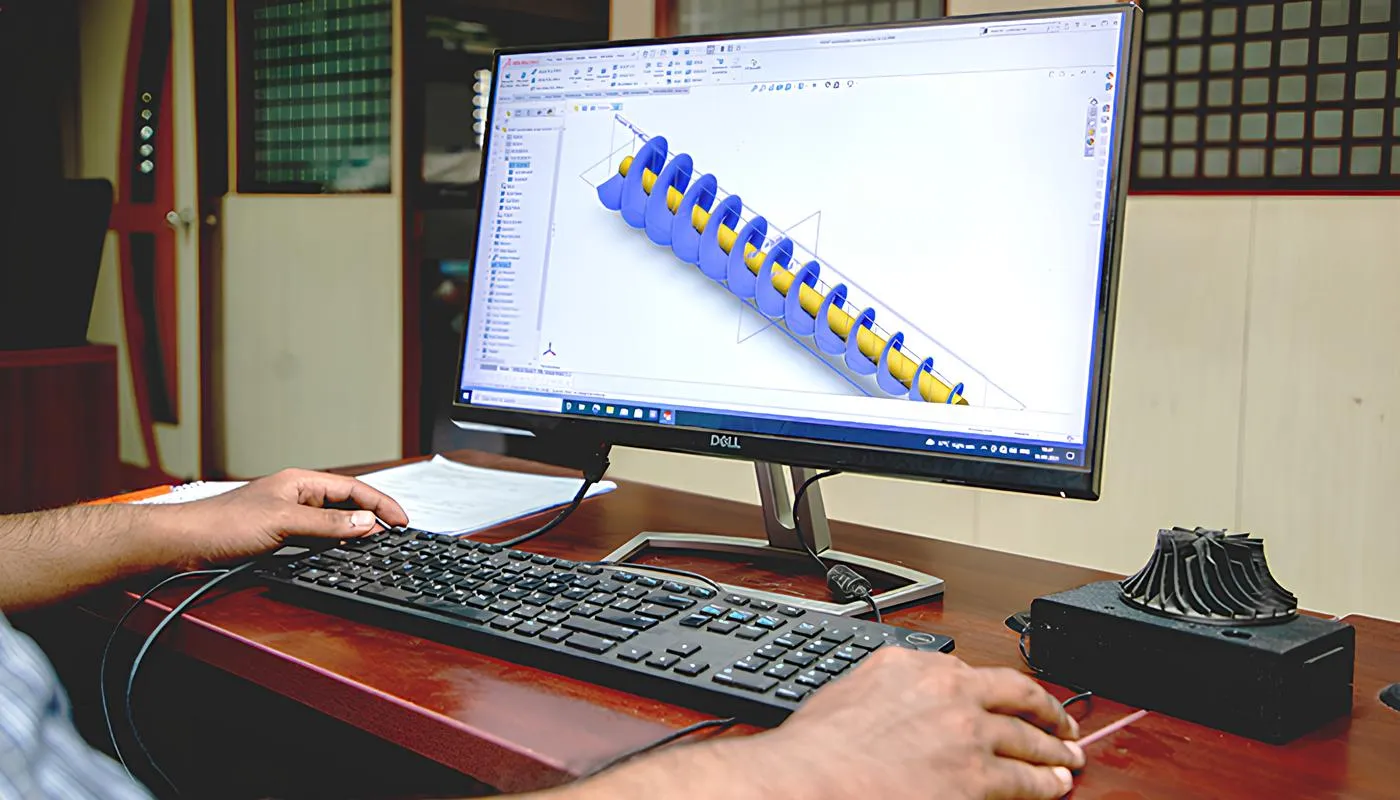
Anyone familiar with continuous carbon fiber fabrication knows the complexity rises sharply with complex shapes, because fiber has to run in the direction of the highest strength and stiffness requirement. On a helix, that direction is constantly changing.
1. Maintaining fiber orientation
The screw portion needs strength mainly in the radial direction, giving the fin the ability to take the bending caused by propulsion force. The tangential direction matters just as much, for stiffness: the fin must not deform under load. So the carbon fiber has to be laid in two perpendicular directions while simultaneously following a helical path.
2. The shaft-screw interface
Power travels through the shaft to the screw portion, which means the interface between them has to be both structurally strong and leakproof.
3. Carbon fiber over-wrap on the shaft
To prevent corrosion, an over-wrap of carbon fiber was also required over the metal shaft.
4. Complex mold shape and fin profile
A layup needs a mold surface that is the negative of the screw. Conventionally that means either welding several parts together or milling away an enormous volume of material from a solid block: both slow, laborious and expensive. On top of that, the fin has a radial outward convex profile required for proper fluid flow.
The shape, strength and stiffness challenges of a carbon fiber Archimedes screw are something you don't even see in composite rocket structures.
Abhijeet Rathore, CTO, Fabheads
How Fabheads manufactured it
We fabricated a continuous carbon fiber Archimedes screw using 3D printing-assisted fabrication on our in-house continuous fiber printers: the fabmachines range. Lead time for the first part was under a week.
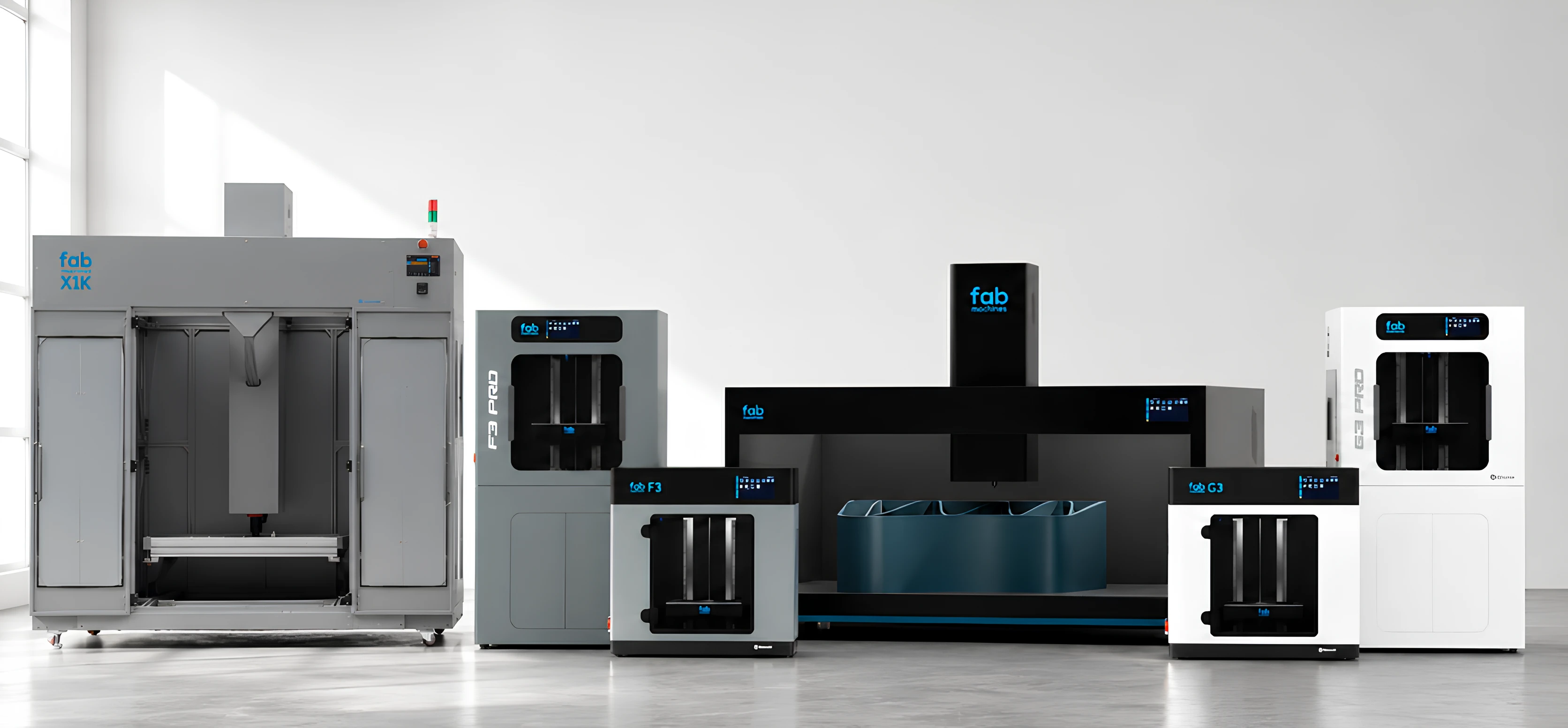
The Archimedes screw is undoubtedly one of the most complex structures we have ever fabricated with our 3D printers.
Akshay Ballal, CPO, Fabheads
The full process is restricted by non-disclosure, but the key steps were these:
- Fibers are oriented along the radial and tangential directions using our proprietary 3D printing-assisted fabrication. Fiber continuity is maintained piece-wise from the bottom of the shaft to the top, with orientation changing along a helical path.
- The shaft is over-wrapped piece-wise with carbon fiber, and the over-wrap joins continuously with the screw fins so that fiber continuity holds across the junction. This gives smooth load transfer from shaft to fin, keeps the interface water-tight, and protects the metal shaft from corrosion.
- The molds were 3D printed in-house. Because the part radius varies along its length, three separate molds were printed rather than one, which was a significant reason the overall fabrication time came down so far.
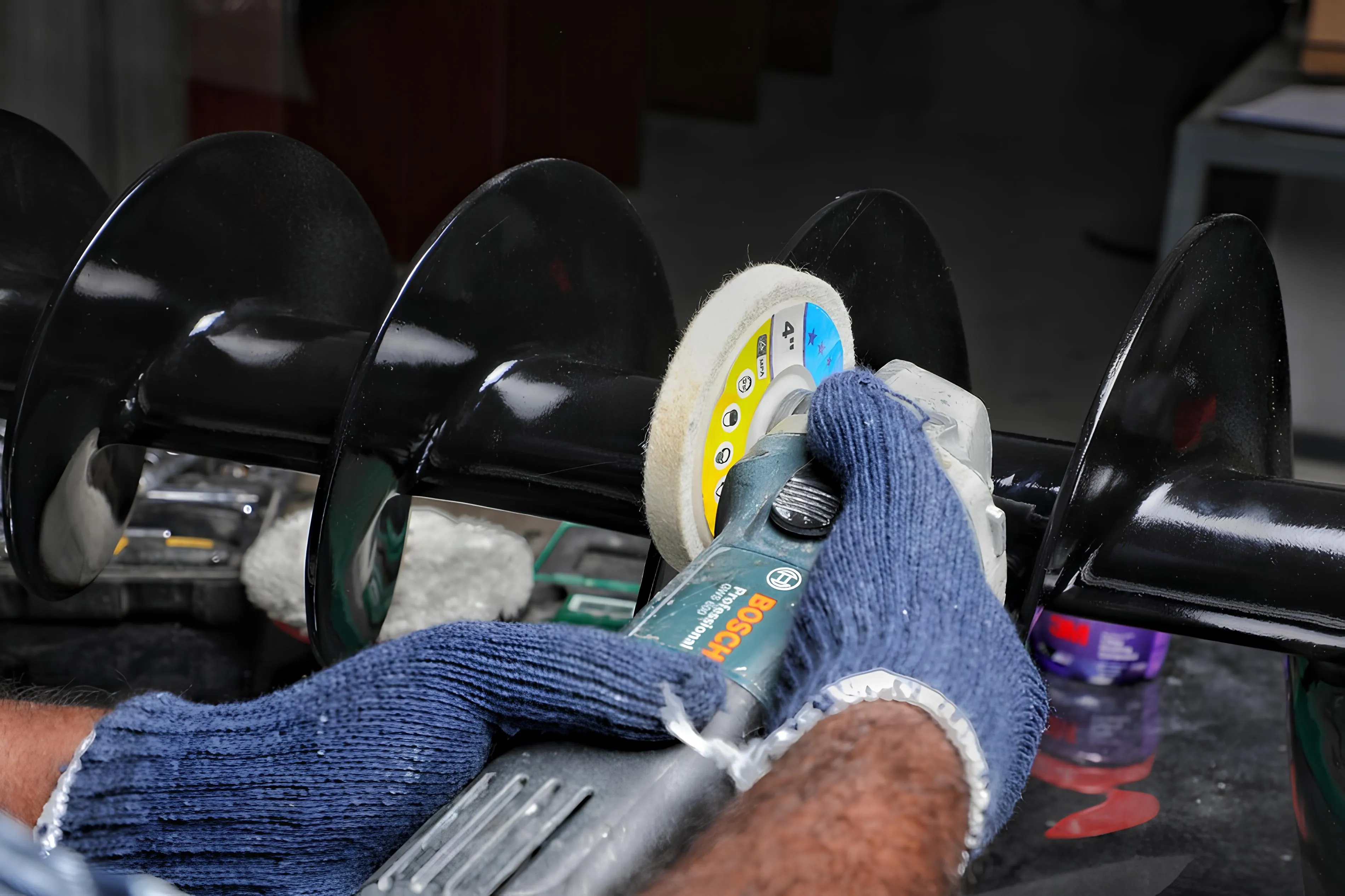
- The fin geometry was finished using a grinding machine developed specifically for the job, capable of linear motion while tapering inwards or outwards to follow the screw profile.
Carbon fiber vs steel vs aluminum for Archimedes screws
| Property | Steel | Aluminum | Carbon fiber |
|---|---|---|---|
| Weight | Heaviest | Baseline | ~30% lighter than aluminum |
| Corrosion | Corrodes in marine and humid conditions | Corrodes | Corrosion-resistant |
| Fatigue life | Preset limit | Preset limit | Better strength and stiffness properties |
| Lead time | One to several months | One to several months | Under a week for the first part |
| Precision | Sheet metal tolerances | Sheet metal tolerances | Better than sheet metal |
| Cost | - | Baseline | Similar or less than aluminum |
What the carbon fiber screw delivers
Using carbon fiber produced a significant weight reduction: around 30% lighter than a typical aluminum screw. Because most of these screws are motor-driven to speed up transfer, a lighter screw also improves overall power utilisation. And carbon fiber is corrosion-resistant, which makes it well suited to water-based applications and improves the working life of the part.
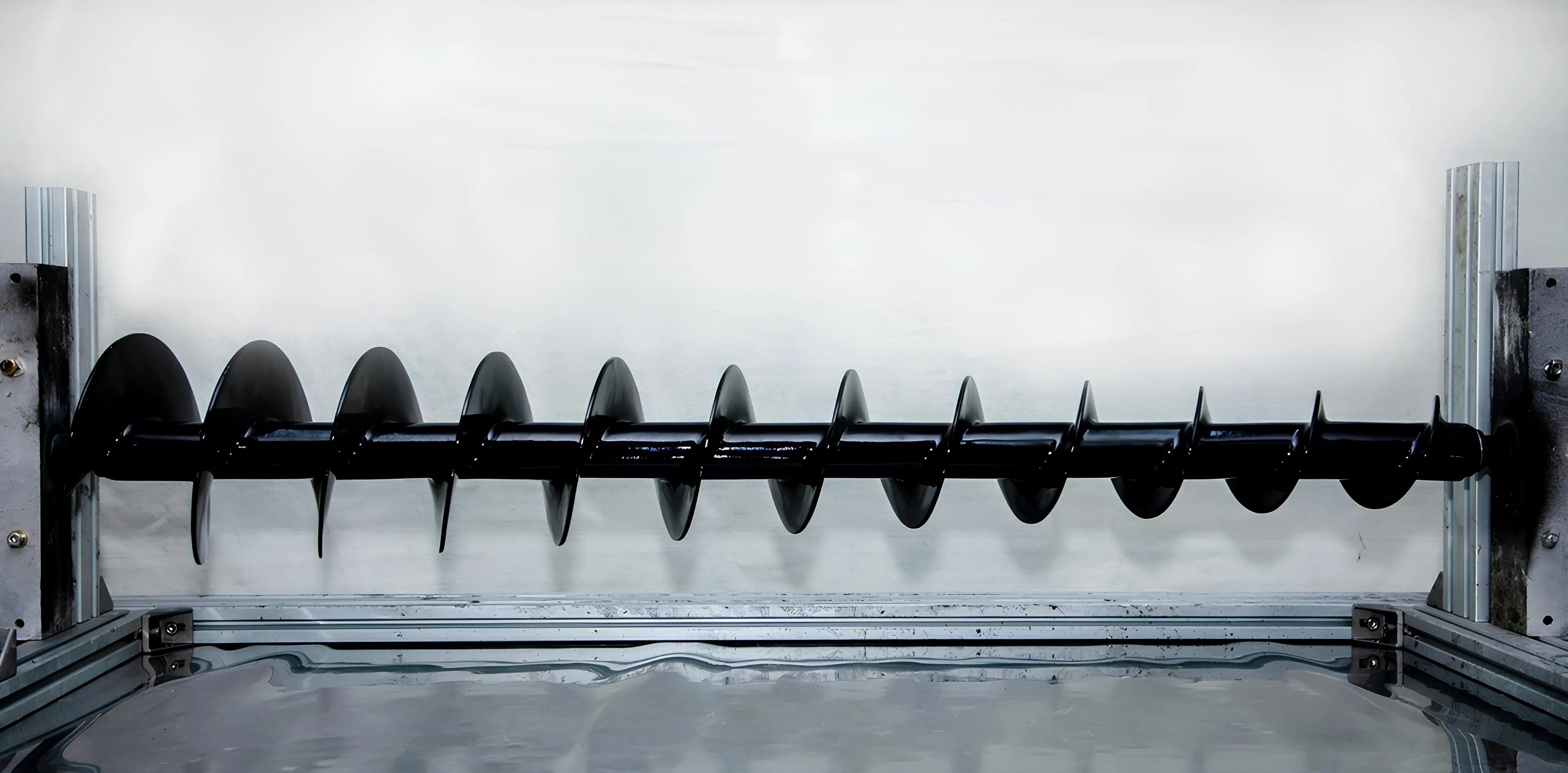
Fabheads is currently the only company in India manufacturing carbon fiber Archimedes screws using 3D printing. The advantages are: improved lead time · at least 30% lighter than aluminum · optimised power consumption · precision better than sheet metal screws · cost similar to or less than aluminum · better strength and stiffness · corrosion resistance suited to marine and humid environments · and full customisation, since our in-house trimming and finishing setup lets us build screws to different shapes and sizes.
What else this capability applies to
Fabheads takes on similarly complex design and fabrication work to widen where composites can be used: drone airframes, marine structures, robotic components and more. These projects are very often the ones other composite fabricators mark as 'not possible with composites'.
With an in-house design and analysis team, an in-house printer farm and continuous fiber printing capability, we have been able to design and fabricate parts that were previously written off. Our end-to-end services cover the full process (design, prototyping, testing, fabrication and post-processing) backed by our own manufacturing infrastructure serving aerospace and mobility alongside marine and robotics.
Have a part that has been quoted as impossible in composites? Talk to our team.
Frequently Asked Questions
Can an Archimedes screw be made from carbon fiber?
Yes. Fabheads has fabricated a continuous carbon fiber Archimedes screw using 3D printing-assisted fabrication. It is around 30% lighter than an equivalent aluminum screw, corrosion-resistant, and was produced in under a week compared to the month or more that metal fabrication typically requires.
Why is a carbon fiber Archimedes screw difficult to manufacture?
Because the fiber must run in two perpendicular directions (radial for bending strength, tangential for stiffness) while simultaneously following a helical path. The shaft-to-screw interface must also be both structurally strong and water-tight, and the mold surface is the negative of a helix, which is slow and expensive to produce conventionally.
How much lighter is a carbon fiber Archimedes screw?
Around 30% lighter than a typical aluminum screw. Since most of these screws are motor-driven, the reduced mass also lowers power consumption in service.
How long does it take to manufacture a carbon fiber Archimedes screw?
Fabheads produced the first part in under a week. Conventional metal manufacturing (welding, sheet metal fabrication, forging and machining) takes from one month to several months depending on the dimensions of the screw.
Who makes composite Archimedes screws?
Fabheads is currently the only company in India manufacturing carbon fiber Archimedes screws using 3D printing. Internationally, Percheron Power in the United States produces composite blades for Archimedes hydrodynamic screw turbines using Light Resin Transfer Molding: a different process applied to a different part of the assembly.